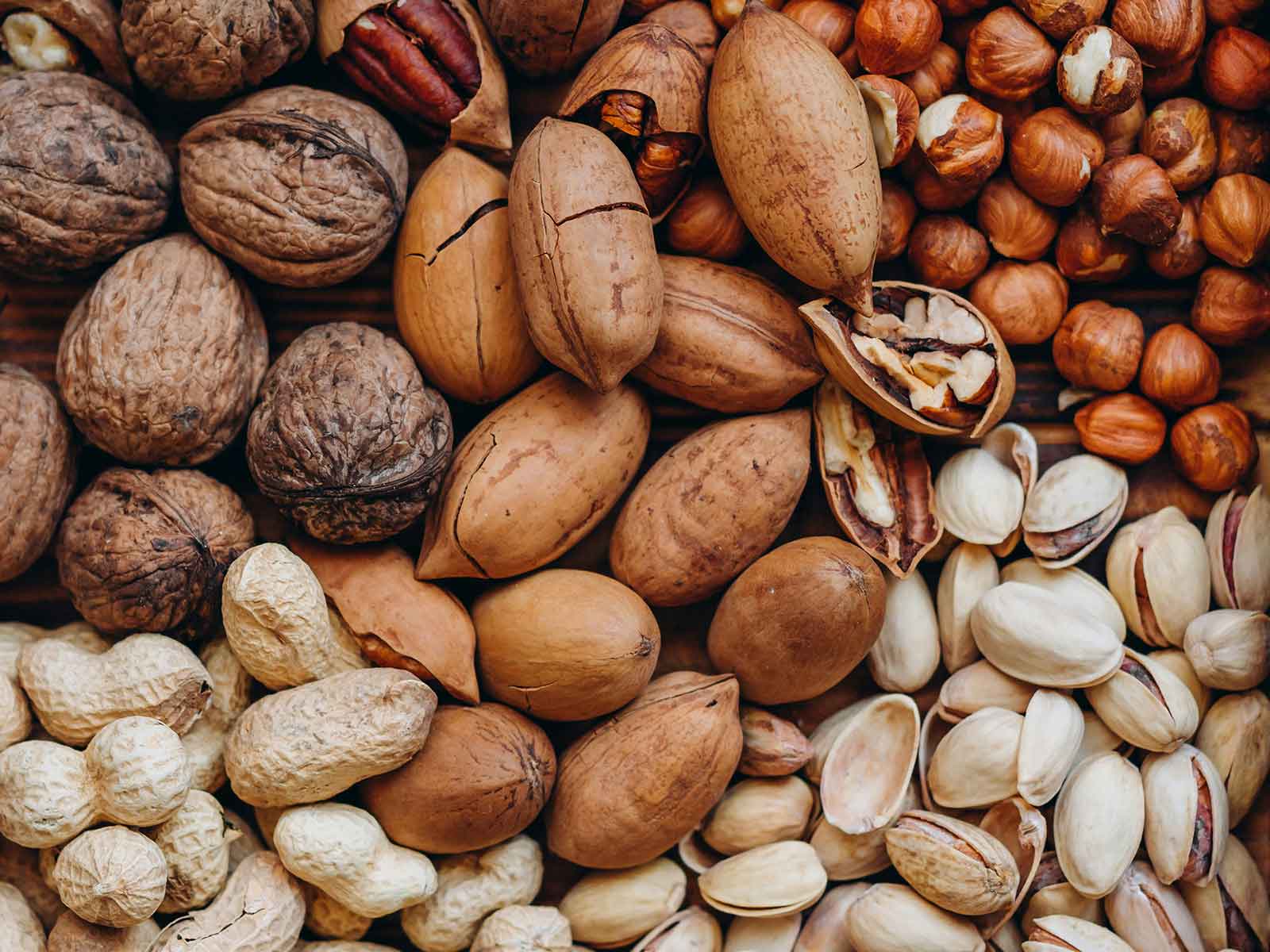
Nuts: healthy powerhouses
Nuts are an important part of the Christmas season – whether as a healthy snack, an ingredient for Christmas biscuits or lovingly wrapped gifts. But nuts are not only delicious, they are also rich in valuable nutrients. In this article, we introduce popular types of nuts, talk about their health benefits and offer a recipe that is even suitable for allergy sufferers.
Nuts and their health effects
Nuts are amongst the most nutritious foods. They provide high-quality fats, plant-based protein, fibre, vitamins and minerals. The individual nut varieties differ in terms of their composition and effect.
Nuts or not?
Walnuts, hazelnuts, peanuts, macadamia nuts, cashews, pistachios and almonds – all of these popular snacks are commonly referred to as nuts. From a botanical perspective, however, this is only true for walnuts, hazelnuts and macadamia nuts (as well as chestnuts). By contrast, peanuts are legumes, while cashews, pistachios and almonds are stone fruits. The Brazil nut, on the other hand, is a capsule.
“True” nuts
Walnuts are rich in omega-3 fatty acids, which have an anti-inflammatory effect and strengthen the cardiovascular system. They also contain antioxidants, vitamin E and phytochemicals that support brain function.
From a botanical perspective, walnuts are true nuts and belong to the walnut family (Juglandaceae).
Use: Walnuts are a traditional ingredient for Christmas biscuits and nut breads in Switzerland.
Hazelnuts are high in vitamin E, B vitamins, magnesium and unsaturated fatty acids. They promote nerve function, protect cells and support heart health.
From a botanical perspective, hazelnuts are true nuts and come from the hazel bush (Corylus avellana).
Use: In southern Germany and Switzerland, hazelnuts are a popular baking ingredient, for example, for nut cakes or biscuits.
Macadamia nuts are considered the “queen of nuts” and are particularly rich in monounsaturated fatty acids, which have a positive effect on cholesterol levels. They also contain vitamin B1, magnesium and fibre, which contribute to nerve function and digestion.
From a botanical perspective, macadamia nuts belong to the Proteaceae family and are true nuts. They originate from Australia, and are now also grown in South Africa and Hawaii.
Use: Their high fat content gives them a particularly creamy taste – ideal for fine baked goods and chocolates.
Pecans are closely related to walnuts and are characterised by their mild, sweet taste. They contain lots of antioxidants, vitamin E and healthy fats, which strengthen the cardiovascular system and protect cells.
From a botanical perspective, pecans belong to the walnut family (Juglandaceae) and are true nuts.
Use: In North America, they are used in the traditional pecan pie and they are also ideal for muesli and wintry baking recipes.
Capsules
Brazil nuts are one of the best natural sources of selenium – a trace element that is important for the immune system and thyroid function. Just 1 to 2 nuts a day cover the daily requirements for an adult.
From a botanical perspective, Brazil nuts are the seeds of the capsule fruit of the Brazil nut tree and are not true nuts.
Use: Due to their high selenium content and the naturally contained radioactive radium, they should be consumed in moderation (1 to 2 per day for adults; children, adolescents, pregnant and breastfeeding women should not eat Brazil nuts).
Stone fruits
Cashews are rich in magnesium, iron, zinc and plant protein. They support blood formation, the immune system and muscle regeneration.
From a botanical perspective, cashews are not true nuts, but the seeds of the cashew apple and belong to the sumac family.
Use: Their mild, creamy taste makes them popular for vegan sauces and snacks.
Almonds provide a lot of vitamin E, calcium and fibre. They promote stable bones, help with cholesterol management and support skin health.
From a botanical perspective, almonds are not true nuts, but the seeds of a stone fruit from the rose family.
Use: They are indispensable during Advent – either as roasted almonds, in biscuits or in marzipan.
Pistachios are small green powerhouses that are rich in vitamin B6, potassium and antioxidants. They support blood formation, the immune system and cell health. Their high protein content also makes them interesting for athletes.
From a botanical perspective, pistachios belong to the sumac family (Anacardiaceae) and are the seeds of the pistachio fruit – i.e. not true nuts.
Use: Pistachios are versatile – whether as a snack, in oriental dishes or as an ingredient in desserts such as baklava.
Legumes
Peanuts are particularly rich in protein, folic acid, magnesium and vitamin B3 (niacin). They support muscle regeneration and nerve function, and contribute to blood formation. Their high protein content makes them a popular snack – especially amongst athletes and vegetarians.
From a botanical perspective, peanuts are not true nuts, but legumes – related to beans and lentils. They grow underground and originate from South America.
Use: Peanuts are versatile – for example as a roasted snack, in peanut butter, Asian dishes or as an ingredient in sweet pastries. Due to their high allergy potential, they should be avoided in patients with known intolerances.
Caution is advised for allergy sufferers because nuts are one of the most common triggers of food allergies. Alternatives such as sunflower seeds, pumpkin seeds or roasted chickpeas offer similar nutrients and are usually well tolerated.
Recipe: Orange and cinnamon balls
Ingredients for 15 to 20:
- 150 g dried fruit (dates or figs)
- 1 tbsp coconut oil
- 30 g millet flakes or rolled oats
- 1 pinch salt
- Zest of an organic orange
- 1/2 tsp cinnamon
- 3 tbsp chopped almonds
Preparation:
- Use a blender or hand blender to mix all ingredients until a smooth, sticky mixture is formed.
- Add the orange zest, cinnamon and almonds and shape the mixture into 20 small or 15 slightly larger balls by hand.
- The balls can be kept in the fridge for up to three weeks.
Tip: Roll the finished energy balls in a bowl of ground nuts or coconut flakes. This looks nice and gives the balls a special flavour.
Nüsse ersetzen
Als Ersatz für Nüsse geeignet sind:
- Je nach Verträglichkeit andere Nussarten
- Erdmandeln (je 100 g Nüsse durch 90 g gemahlene Erdmandeln ersetzen)
- Kokosraspeln
- Saaten wie Kürbiskerne, Sonnenblumenkerne, Sesam
- Gepuffter Amarant/Quinoa/ Dinkel
- Haferflocken.
Tipp: Haferflocken, Saaten oder Körner zuvor in einer Pfanne ohne Fett anrösten. Das erzeugt ein intensiveres Aroma.
Questions and answers about nuts
Yes, nuts contain valuable fats, protein, fibre and antioxidants. They promote heart health, brain function and help with cholesterol management.
Walnuts and pistachios are rich in omega-3 fatty acids and antioxidants, which have a positive effect on the heart and brain.
A handful (approx. 25—30 g) per day is considered healthy – ideal as a snack or in muesli.
Almonds, walnuts and hazelnuts have a low glycaemic index and are particularly suitable for diabetics.
Yes – macadamia nuts are considered particularly healthy when consumed in moderation. They contain:
- monounsaturated fatty acids, which lower cholesterol and protect the heart
- fibre, which promotes digestion and stabilises blood sugar levels
- antioxidants such as vitamin E, which provide cell protection and slow down the ageing process
- minerals such as magnesium, potassium and iron, which are important for nerves, muscles and bones.
Special feature: Despite their high fat content, macadamias are filling and, like other nuts, can help with weight management by reducing cravings.
Brazil nuts naturally contain more radium than other foods. The Deutsche Gesellschaft für Ernährung (German Nutrition Society) suggests a maximum of two Brazil nuts per day for adults. As a precaution, pregnant and breastfeeding women, children and adolescents should not eat Brazil nuts at all.
Sunflower seeds, rolled oats or roasted chickpeas are good alternatives to almonds in recipes.
No. If you have a nut allergy, you are not automatically allergic to all nuts. An allergist can determine exactly which nuts a person is allergic to. For known allergies, alternatives such as seeds should be used – e.g. linseed or pumpkin seeds.
